


Computer Science and Engineering (Cyber Security)
Overview
The Department of Cybersecurity provides a modern, technology-enabled, and industry-oriented environment that supports academic excellence, practical learning, research, innovation, and professional development. The department is equipped with advanced infrastructure and specialized facilities that enable students to explore cybersecurity concepts through hands-on learning and real-world applications.
State-of-the-Art Cyber Range
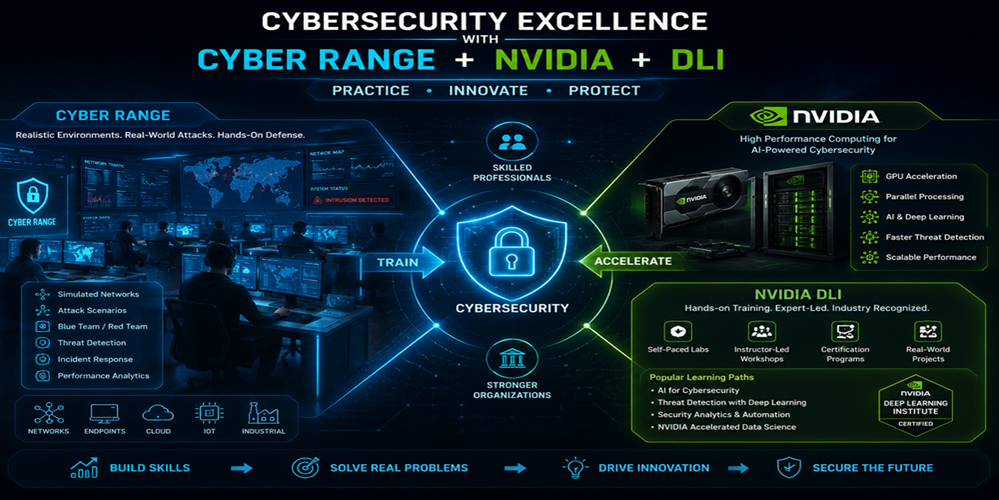
The department's State-of-the-Art Cyber Range provides a realistic and controlled environment for cybersecurity training, simulation, experimentation, and research. Students can safely simulate cyber attacks, analyse threats, investigate incidents, and develop effective defence strategies.
The Cyber Range supports hands-on activities in ethical hacking, penetration testing, vulnerability assessment, network security, digital forensics, cyber threat intelligence, incident response, malware analysis, and cyber defence. It also provides an environment for Capture-the-Flag (CTF) competitions, cybersecurity challenges, industry training, and advanced research.
Advanced Learning and Computing Infrastructure
The department provides smart and technology-enabled classrooms supported by modern computing infrastructure and digital learning resources. These facilities enable interactive teaching, demonstrations, blended learning, programming, cybersecurity experimentation, and project-based learning.
Students have access to computing environments and software resources supporting cybersecurity, artificial intelligence, machine learning, cloud computing, network security, digital forensics, secure programming, and other emerging technologies.
The department also provides access to digital learning resources, reference materials, research publications, online platforms, and technical resources that support academic and research activities.
Research, Innovation and Project Facilities
The department promotes a strong culture of research, innovation, and experiential learning. Students and faculty members are encouraged to undertake research and development activities addressing contemporary cybersecurity challenges.
The facilities support projects and research in areas such as:
- Artificial Intelligence and Cybersecurity
- IoT and Embedded Security
- Network and Cloud Security
- Digital Forensics
- Cyber Threat Intelligence
- Malware Analysis
- Privacy and Data Protection
- Secure Software and Application Security
- Blockchain and Emerging Security Technologies
Students are provided opportunities to work on mini projects, minor projects, major projects, research projects, hackathons, cybersecurity challenges, and innovative product development.
Industry Interaction and Professional Development
The department provides a strong platform for industry interaction and professional skill development through expert lectures, technical workshops, hands-on training, certification-oriented programs, internships, industry projects, hackathons, and cybersecurity competitions.
Students are encouraged to pursue industry-recognized certifications and develop practical expertise in areas such as ethical hacking, cybersecurity operations, cloud security, digital forensics, network security, and cyber threat intelligence.
Industry and academic collaborations provide students with opportunities to interact with cybersecurity professionals, researchers, and practitioners and gain exposure to current technologies and professional practices.
Student-Centric Cybersecurity Ecosystem
The department provides a collaborative and student-centric environment that encourages learning by doing. Students work in teams, participate in technical activities, engage with experts, and develop solutions to real-world cybersecurity problems.
The overall infrastructure and learning environment are designed to develop not only technical competence but also critical thinking, creativity, communication, collaboration, leadership, ethical responsibility, and problem-solving skills.
Through its advanced facilities, practical learning environment, research opportunities, and industry engagement, the Department of Cybersecurity prepares students to become skilled, ethical, innovative, and future-ready cybersecurity professionals.
